Examples
| File | Demonstrates |
|---|---|
examples/basic.py |
Minimal JevClient usage |
examples/langgraph_basic.py |
A minimal LangGraph graph with a JevNode |
examples/confidence_routing.py |
Thresholds and low_confidence="human_review" |
examples/work_ticket.py |
Building a WorkTicket from Jev's decisions |
examples/multi_agent.py |
Full graph: understand -> Jev -> ticket -> routed workers |
All examples read TYPESAFE_API_KEY from the environment (or a local .env
file, if you installed langgraph-jev[examples]) and make real calls to the
Jev API.
WorkTicket
Jev doesn't generate the WorkTicket itself -- it provides the decisions,
and your application code builds the typed contract from them:
decision = state["decision"]

ticket = WorkTicket(
    id="WT-1234",
    type=decision["work_type"].value,
    priority=decision["priority"].value,
    needs_engineer=decision["needs_engineer"].value,
    title=request["title"],
    description=request["description"],
    context={"customerTier": request.get("customerTier")},
    acceptance_criteria=["Identify root cause", "Add regression coverage if appropriate"],
)
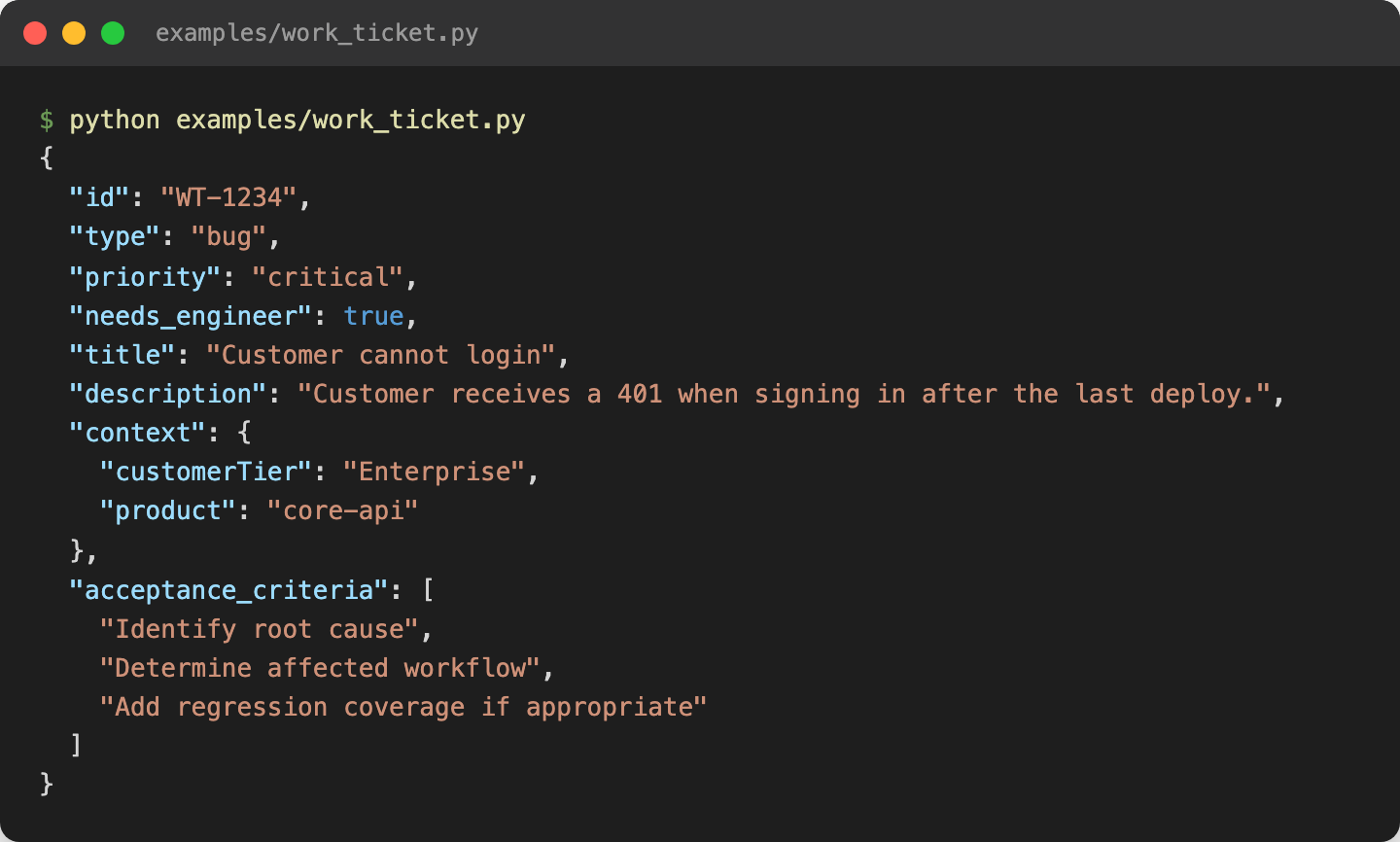
See examples/work_ticket.py for the full example: an understand step feeds
Jev, Jev's decisions build a WorkTicket, and the ticket routes to a coding,
support, or docs worker. examples/multi_agent.py wires this into a
complete LangGraph graph with routed worker nodes.